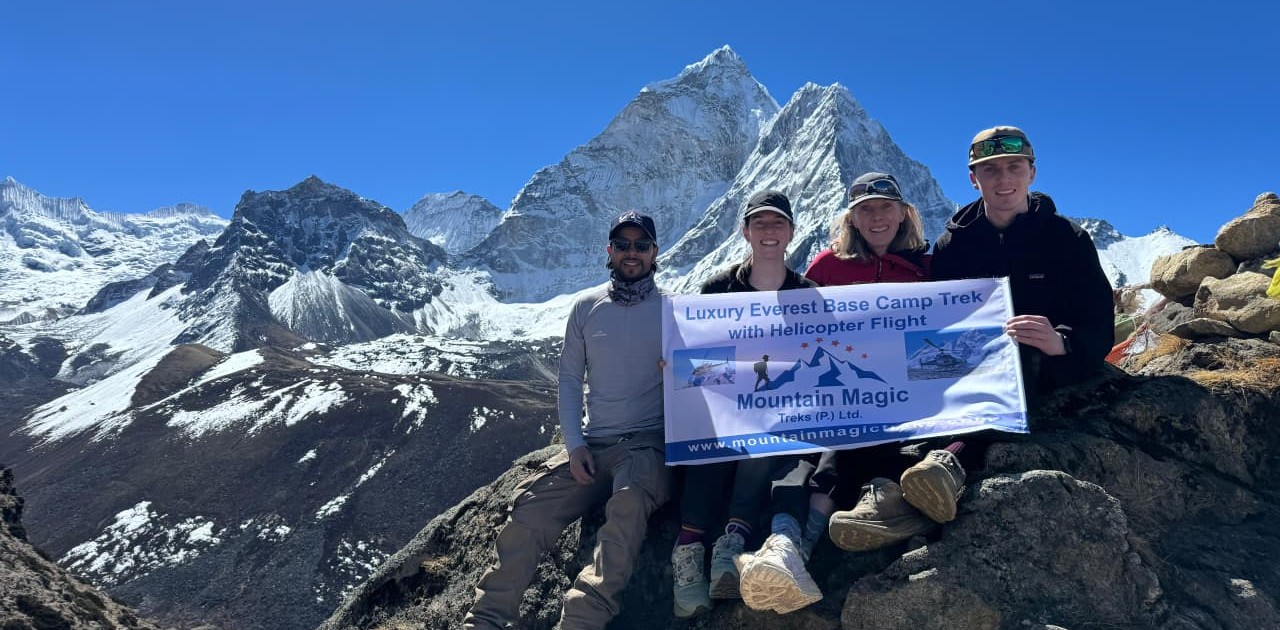
The Everest region does not reveal everything at once. The first trails may pass through green hills and forests, while later sections lead into a cold world of rock, ice, and towering peaks. This gradual change is one reason the journey feels so special.
The Everest Base Camp Trek with helicopter return allows you to experience this transformation on foot before ending the adventure with a flight above the Himalayas. You get the challenge of trekking to Everest Base Camp without having to spend several extra days walking the entire route back.
For travelers who want a memorable mountain experience with a shorter return, it offers an interesting balance.
Your Adventure Starts Far From Everest
The journey usually begins in Kathmandu, where you can prepare before heading toward Lukla.
The city is busy, colorful, and full of life. Once you leave it behind, the atmosphere changes quickly.
Lukla Opens the Door
Lukla is surrounded by hills and mountain scenery.
After landing, you begin walking through the Khumbu region. The first trails are relatively green and pass through small villages and river valleys.
This gentle beginning gives you time to settle into your trekking routine.
Follow the River Into the Khumbu
The Dudh Koshi River becomes a familiar sight during the early part of the route.
Its sound follows you through several sections of the trail.
Bridges Make the Trail Memorable
Suspension bridges connect different parts of the valley.
Some are decorated with colorful prayer flags that move in the mountain wind.
Crossing them can feel exciting at first, especially when the river is far below.
They are also a reminder that mountain travel is very different from walking on city roads.
Namche Brings a New Energy
After several hours of walking over multiple days, you reach Namche Bazaar.
The town sits in a large mountain bowl and has become an important center for travelers in the Everest region.
Do Not Treat Namche as Just a Night Stop
Namche is an important acclimatization location.
You can explore the town, take a short hike, or simply relax.
The purpose is to help your body adjust before moving higher.
This part of the Everest Base Camp Trek with helicopter return should not be rushed.
Look for More Than Everest
Mount Everest is the obvious star of the journey, but it is not the only mountain worth watching.
The Khumbu region is surrounded by impressive Himalayan peaks.
Let the View Surprise You
Sometimes the best mountain view appears when you are not looking for it.
A peak may emerge from behind clouds while you are having tea or walking through a village.
Keep your camera ready, but do not spend the entire trek looking through a screen.
Walk Through Sherpa Communities
The trail passes through settlements shaped by Sherpa culture.
You can see traditional homes, stone walls, prayer wheels, monasteries, and colorful flags.
Travel With Respect
People live and work in these communities every day.
Ask before photographing someone closely, especially children or religious activities.
A respectful traveler gets a deeper experience because they are paying attention to the people as well as the scenery.
Tengboche Gives You a Quiet Moment
Tengboche is famous for its monastery and beautiful surroundings.
After the busier feeling of Namche, the village can feel calm and peaceful.
Enjoy the Stillness
You do not need to fill every minute with activity.
Sit outside your lodge.
Watch clouds move around the mountains.
Listen to the wind.
These quiet moments can become some of your strongest memories from the trek.
Dingboche Shows the High Himalayas
As you move toward Dingboche, trees become less common.
The valley opens, the ground becomes rockier, and the air feels thinner.
Change Your Walking Style
At higher elevations, walking quickly can become exhausting.
Use short steps and keep your breathing controlled.
Regular breaks are better than pushing yourself until you are completely tired.
Dingboche also provides valuable time for acclimatization.
The Trail Becomes More Serious
Beyond Dingboche, the landscape feels increasingly remote.
Lobuche is surrounded by rocky slopes and large Himalayan peaks.
The cold is more noticeable, especially after sunset.
Protect Your Energy
The final sections require patience.
Eat enough, stay hydrated, and keep your warm clothing accessible.
Your goal is not to finish each day as quickly as possible.
Your goal is to keep moving safely toward Base Camp.
Gorakshep Sits Near the Finish
Gorakshep is one of the last major settlements on the route.
From here, you continue toward Everest Base Camp.
The terrain is rough, and the altitude makes every step more demanding.
Break the Distance Into Small Goals
Instead of thinking about the entire route, focus on the next landmark.
Walk for a while.
Take a short rest.
Continue again.
This simple approach can make the high-altitude trail feel more manageable.
Stand at Everest Base Camp
Eventually, you reach Everest Base Camp.
The moment can feel different for everyone.
Some people feel excited. Others feel tired. Many simply stand quietly and look around.
Remember What It Took to Get There
Base Camp is meaningful because you walked to it.
You started at Lukla and passed through forests, villages, bridges, and high valleys.
Take a moment to appreciate that journey.
The photograph will capture the place, but the memory will come from everything that happened before it.
Climb Higher for the Big Panorama
Kala Patthar is approximately 5,545 meters above sea level.
It is known for its wide views of Mount Everest and other major Himalayan peaks.
Prepare for a Cold Morning
Many trekkers make the climb early in the day.
The temperature can be extremely cold, so proper layers matter.
The climb may feel tough, but the mountain panorama can make the effort worthwhile.
Change Your Perspective With a Helicopter
After the trekking portion is complete, the Everest Base Camp Trek with helicopter return takes you back by air rather than requiring a full walk to Lukla.
This can save several days.
Watch the Trail From Above
The helicopter gives you a completely different understanding of the route.
The villages you visited become tiny dots.
The trails appear narrow against enormous slopes.
The valleys stretch far into the distance.
You have spent days experiencing the mountains from ground level. Now you can see how the entire landscape connects.
Pack for Changing Conditions
The Everest region can move between sunny and cold conditions quickly.
Your gear should be practical rather than excessive.
Useful Items to Carry
A good daypack should include:
-
Water
-
Snacks
-
Sunglasses
-
Sunscreen
-
Warm layer
-
Waterproof jacket
-
Gloves
-
Headlamp
-
Personal essentials
Keeping these items accessible is more useful than packing everything into one large bag.
Final Thoughts
The Everest Base Camp Trek with helicopter return is a journey of changing landscapes.
You begin among green hills and rivers, move through Sherpa villages and forests, and eventually reach the cold, rocky world around Everest Base Camp.
Along the way, you experience local culture, mountain life, and the challenge of high-altitude trekking.
Then the helicopter provides a completely different ending.
Instead of retracing every step, you rise above the route and watch the Himalayas spread beneath you.
That combination is what makes the trip appealing. You earn the experience on foot, then finish by seeing the same mountains from the sky.
Frequently Asked Questions
What is special about the Everest Base Camp Trek with helicopter return?
It combines a classic trek to Everest Base Camp with a helicopter return, reducing the time needed for the journey back.
Why is Namche important?
Namche is a major settlement and an important acclimatization stop before continuing toward higher elevations.
What can I see along the trail?
You can see forests, rivers, suspension bridges, Sherpa villages, monasteries, glaciers, and several major Himalayan peaks.
Is Kala Patthar difficult?
The climb is demanding mainly because of the high altitude. A slow pace and proper preparation are important.
Can weather affect the helicopter ride?
Yes. Poor visibility, clouds, wind, and other conditions can cause delays or changes.
Should I leave extra time in my itinerary?
Yes. Extra time is useful because mountain weather can be unpredictable.