
Every morning is a new gift from Allah (SWT). When a Muslim wakes up from sleep, the first act of worship he can do is to read Subah Uthne Ki Dua. This short yet powerful supplication is a Sunnah of the Prophet Muhammad (ﷺ). It fills the heart with gratitude and connects a person to Allah right from the first moment of the day.
Reading Subah Uthne Ki Dua is a way of acknowledging that life and death are in the hands of Allah alone. Sleep is described in the Quran and Hadith as a minor death, and waking up is a blessing that deserves praise and thankfulness.
Subah Uthne Ki Dua in Arabic
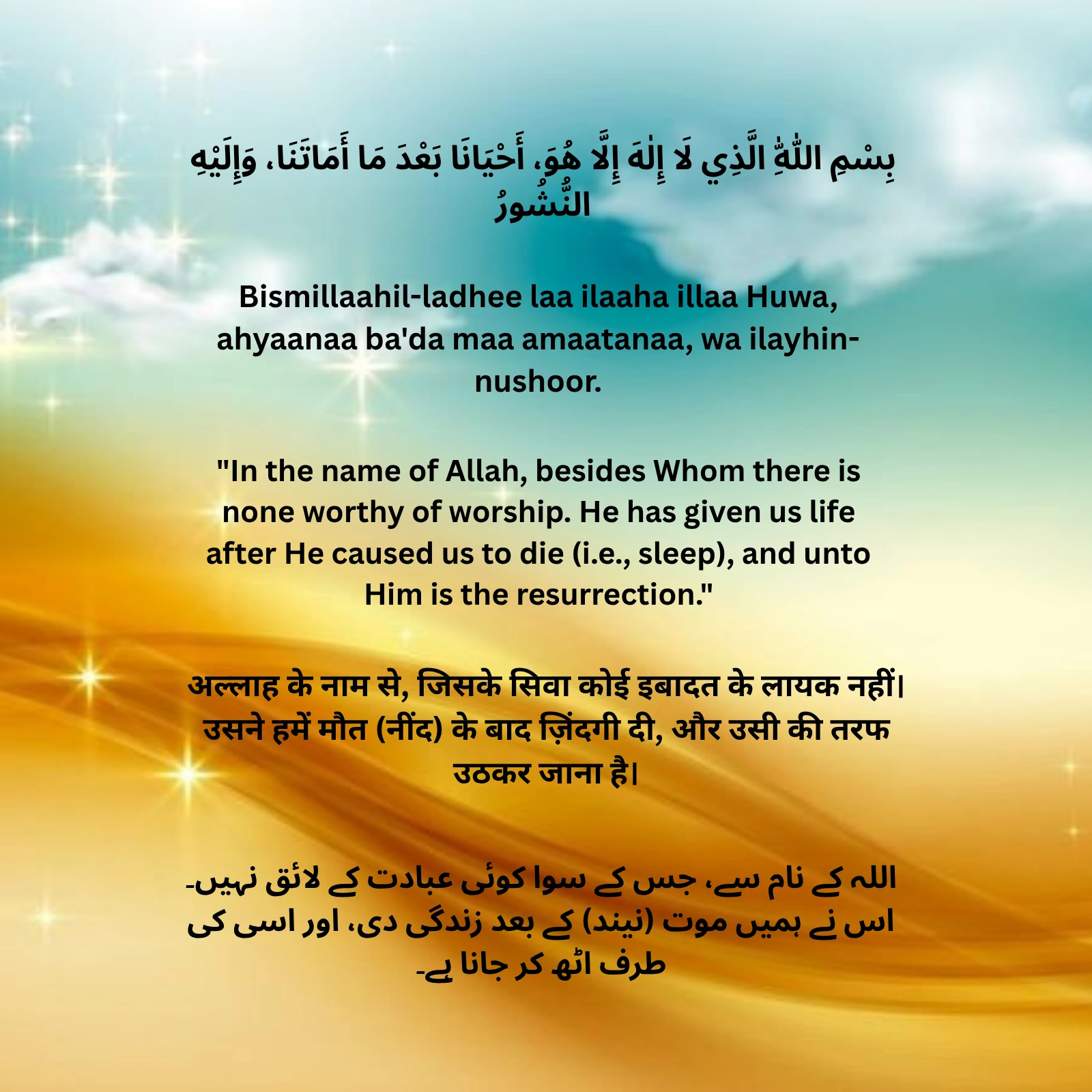
بِسْمِ اللّٰهِ الَّذِي لَا إِلٰهَ إِلَّا هُوَ، أَحْيَانَا بَعْدَ مَا أَمَاتَنَا، وَإِلَيْهِ النُّشُورُ
Subah Uthne Ki Dua in Roman English (Transliteration)
Bismillaahil-ladhee laa ilaaha illaa Huwa, ahyaanaa ba’da maa amaatanaa, wa ilayhin-nushoor.
Subah Uthne Ki Dua Meaning in English
“In the name of Allah, besides Whom there is none worthy of worship. He has given us life after He caused us to die (i.e., sleep), and unto Him is the resurrection.”
Subah Uthne Ki Dua in Hindi (Tarjuma)
अल्लाह के नाम से, जिसके सिवा कोई इबादत के लायक नहीं। उसने हमें मौत (नींद) के बाद ज़िंदगी दी, और उसी की तरफ उठकर जाना है।
Subah Uthne Ki Dua in Urdu
اللہ کے نام سے، جس کے سوا کوئی عبادت کے لائق نہیں۔ اس نے ہمیں موت (نیند) کے بعد زندگی دی، اور اسی کی طرف اٹھ کر جانا ہے۔
Word-by-Word Meaning Table
| Arabic Word | Roman English | Meaning |
|---|---|---|
| بِسْمِ اللّٰهِ | Bismillah | In the name of Allah |
| الَّذِي | Alladhee | Who |
| لَا إِلٰهَ إِلَّا هُوَ | Laa ilaaha illaa Huwa | None worthy of worship except Him |
| أَحْيَانَا | Ahyaanaa | He gave us life |
| بَعْدَ مَا أَمَاتَنَا | Ba’da maa amaatanaa | After He caused us to die (sleep) |
| وَإِلَيْهِ النُّشُورُ | Wa ilayhin-nushoor | And unto Him is the resurrection |
Disclaimer: The duas, translations, and Islamic information provided on this website are for educational and religious purposes only. We have made every effort to ensure that all Arabic texts, translations, and hadith references are taken from authentic and reliable Islamic sources.
Hadith Reference
This dua is reported in Sahih Bukhari (Hadith No. 6325) and also in Sunan Abu Dawood. Imam Bukhari has recorded it in Kitab al-Da’awat. The Prophet Muhammad (ﷺ) taught this supplication to be read upon waking up from sleep.
It is narrated from Hudhayfah (RA) that when the Prophet (ﷺ) would wake up from sleep, he would say this dua.
Brief Explanation
Subah Uthne Ki Dua is not just a phrase. It is a deep acknowledgment of Allah’s power and mercy.
When a person sleeps, his soul is taken by Allah in a special way. This is mentioned in the Quran (Surah Az-Zumar, 39:42). When he wakes up, it means Allah has returned his soul and given him another day to live, worship, and seek forgiveness.
By reading Subah Uthne Ki Dua, a Muslim begins his day with the remembrance of Allah (Dhikr), gratitude for life, and awareness of the Day of Resurrection. This sets a positive and spiritual tone for the entire day.
When to Read Subah Uthne Ki Dua
Subah Uthne Ki Dua should be read immediately upon waking up from sleep in the morning. The best practice is:
- Read it before getting up from bed
- Read it silently or in a low voice
- Read it with full understanding and presence of heart
- Read it before checking your phone or speaking to anyone
It can be read after Fajr Salah as well if someone wakes up for Salah first. The key is to read it as early as possible after waking.
Benefits of Reading Subah Uthne Ki Dua
Reading Subah Uthne Ki Dua regularly carries many spiritual and practical benefits:
1. Start of Day with Allah’s Remembrance Beginning the day with the name of Allah brings barakah (blessings) in time, work, and daily activities.
2. Expression of Gratitude Sleep is compared to death in Islamic teaching. Waking up is a mercy of Allah. This dua is a direct expression of shukr (gratitude) for that mercy.
3. Reminder of the Hereafter The last words of this dua “wa ilayhin-nushoor” remind the believer that this life is temporary and the return is to Allah. This awareness keeps a Muslim spiritually alert and responsible throughout the day.
4. Following the Sunnah Reciting this dua is a direct following of the Sunnah of Prophet Muhammad (ﷺ). Every Sunnah act brings the believer closer to Allah and earns spiritual reward.
5. Protection and Peace Starting the day with Dhikr keeps the heart calm, the mind focused, and the soul protected from negative influences throughout the day.
Additional Morning Dua (Waking Up Dua – Short Version)
Some scholars also mention a shorter version recited immediately upon waking:
Arabic: اَلْحَمْدُ لِلّٰهِ الَّذِي أَحْيَانَا بَعْدَ مَا أَمَاتَنَا وَإِلَيْهِ النُّشُورُ
Transliteration: Alhamdulillaahil-ladhee ahyaanaa ba’da maa amaatanaa wa ilayhin-nushoor.
Meaning: “All praise is for Allah Who gave us life after causing us to die, and unto Him is the resurrection.”
This version is also recorded in Sahih Bukhari (Hadith No. 6312) from the narration of Al-Bara ibn Azib (RA).
Dua After Waking Up – Complete Morning Routine in Islam
Reading Subah Uthne Ki Dua is just the beginning. A complete Islamic morning routine includes:
- Waking up dua – the dua mentioned above
- Rubbing the face and eyes – to remove traces of sleep
- Using the miswak – following the Sunnah of cleanliness
- Performing Wudu – ritual purification
- Praying Fajr Salah – the first obligatory prayer of the day
- Reading morning Adhkar – including Ayat al-Kursi, last two verses of Surah Baqarah, and morning supplications
Read Also: Nazar Utarne Ki Dua
Conclusion
Subah Uthne Ki Dua is one of the most beautiful and meaningful practices a Muslim can adopt in daily life. It takes only a few seconds, yet it sets the entire tone of the day with faith, gratitude, and connection to Allah.
The Prophet Muhammad (ﷺ) taught us this dua to remind us that every morning is a gift a second chance to do good, seek forgiveness, and strengthen our relationship with Allah. Sleep is a minor death, and waking up is a new beginning.
Make it a habit to read Subah Uthne Ki Dua in Arabic every morning with its meaning in your heart. Whether you read it in Hindi, Urdu, Roman English, or English understand what you are saying, because that understanding brings true spiritual benefit.
May Allah grant us the tawfiq (ability) to remember Him in the morning and evening, and may He fill our days with His mercy and barakah. Ameen.
? FAQs About Subah Uthne Ki Dua
Q1: What is Subah Uthne Ki Dua?
Subah Uthne Ki Dua is the supplication a Muslim reads upon waking up from sleep. It praises Allah for returning life after sleep and reminds the believer of the Day of Resurrection.
Q2: Is Subah Uthne Ki Dua from Hadith?
Yes. It is an authentic dua recorded in Sahih Bukhari and Sunan Abu Dawood. It has strong isnad (chain of narration) and is widely practiced.
Q3: When exactly should we read Subah Uthne Ki Dua?
It should be read immediately upon waking up, preferably while still in bed or sitting up, before beginning any other activity.
Q4: What is Subah Uthne Ki Dua in Roman English?
The Roman English transliteration is: Bismillaahil-ladhee laa ilaaha illaa Huwa, ahyaanaa ba’da maa amaatanaa, wa ilayhin-nushoor.
Q5: Can children also read Subah Uthne Ki Dua?
Yes, absolutely. Children should be taught this dua from an early age so that the habit of morning dhikr becomes part of their daily routine.
🤲 Read More Duas Every Day At Islamic Dua Hub