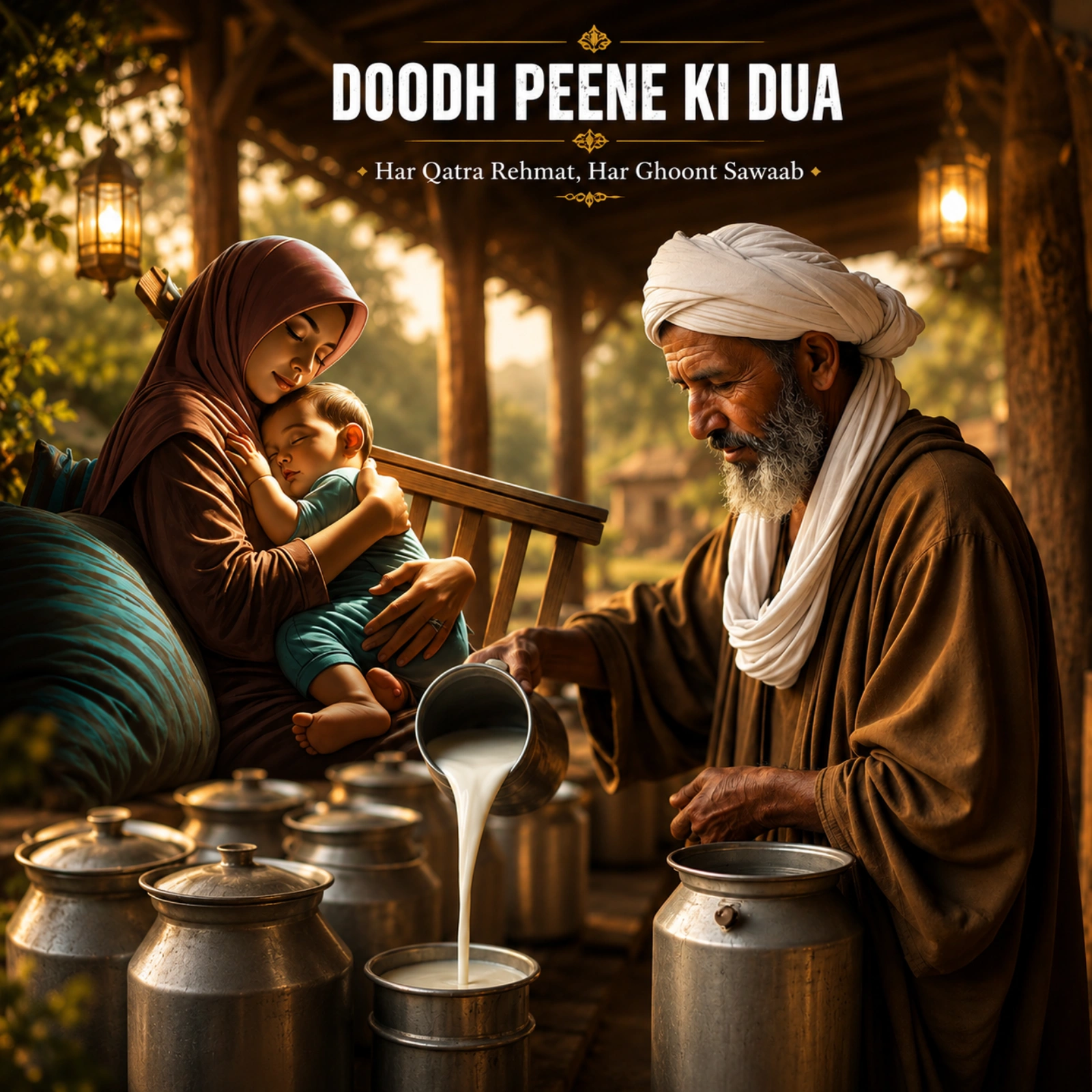
Milk is one of the purest blessings Allah has placed on this earth, and Islam teaches us to remember Him even in the smallest daily habits. Doodh Peene Ki Dua is the short supplication recited after drinking milk, and it comes directly from the Sunnah of Prophet Muhammad ﷺ. Every believer, young or old, can memorise this dua within seconds and carry a piece of gratitude into an ordinary moment of the day.
This page brings together the Doodh Peene Ki Dua in Arabic, its Roman transliteration, and its tarjuma in Hindi and Urdu, along with the hadith reference, correct timing, and the spiritual benefits attached to it. Whether milk is served warm at night or poured fresh in the morning, this dua turns a simple drink into an act of worship.
Milk holds a special place in the Quran as well. Surah An-Nahl (16:66) speaks of the animals Allah has created for us, describing how “pure milk, easy and pleasant for those who drink it” comes from within their bodies as a sign of His wisdom and mercy. Against this background, it becomes clear why the Prophet ﷺ chose to pair this ordinary drink with a dua of gratitude and increase rather than passing over it in silence.
For families raising young children, this dua is often one of the first Islamic phrases taught at home, right alongside “Bismillah” and “Alhamdulillah.” Its short length and gentle rhythm make it approachable for a five-year-old, while its meaning remains deep enough to reflect on well into adulthood.
Doodh Peene Ki Dua In Arabic
اللَّهُمَّ بَارِكْ لَنَا فِيهِ وَزِدْنَا مِنْهُ
Doodh Peene Ki Dua In Roman English
Allahumma barik lana fihi wa zidna minhu
This transliteration reflects the Doodh Peene Ki Dua In Roman English exactly as it is recited by Arabic speakers, making it easy for non-Arabic readers to pronounce the words correctly.
Doodh Peene Ki Dua In English
Translation: “O Allah, bless us in it, and give us more of it.”
Doodh Peene Ki Dua In Hindi
तर्जुमा: “या अल्लाह! हमारे लिए इसमें बरकत दे और हमें इससे ज़्यादा अता फ़रमा।”
Doodh Peene Ki Dua In Urdu
اردو ترجمہ: “اے اللہ! ہمارے لیے اس میں برکت دے اور ہمیں اس سے زیادہ عطا فرما۔”
Doodh Peene Ki Dua With Tarjuma
Reading the Doodh Peene Ki Dua With Tarjuma helps a person feel the actual meaning behind the Arabic words instead of reciting them without thought. The tarjuma reminds us that milk is not just food, it is a mercy from Allah that deserves both thanks and a prayer for increase.
Reciting the Arabic alongside its tarjuma also keeps the wording accurate, since translating word by word without care can shift the meaning of a dua. Pairing “Allahumma barik lana fihi wa zidna minhu” with its Hindi and Urdu meaning ensures the heart and the tongue move together during this small act of remembrance.
Disclaimer: This content is prepared for general Islamic knowledge and educational purposes based on authentic hadith references. Readers are encouraged to verify religious matters with a qualified scholar for personal guidance.
Explanation
This dua is narrated by Ibn Abbas (may Allah be pleased with him) and recorded in Sunan Abi Dawud, Hadith 3730. It is reported that when the Prophet ﷺ was given milk to drink, he said this exact supplication and then added, “for no food or drink satisfies like milk.”
This detail is significant because it separates milk from every other food. For ordinary meals, the Sunnah teaches a believer to ask Allah for “something better” after eating. But for milk, the Prophet ﷺ asked for increase in the same blessing, since milk alone provides nourishment equal to both eating and drinking. It is respectful, simple, and rooted in an authentic narration rather than folk custom.
The wording of the dua is deliberately balanced between two requests. “Barik lana fihi” asks Allah to place blessing inside what has already been given, meaning that even a small cup of milk should carry more nutritional and spiritual value than its size suggests. “Zidna minhu” then asks for continued supply of the same blessing in the future, teaching a believer to combine thankfulness for the present with hope for what is still to come.
Some scholars also note the etiquette the Prophet ﷺ observed around milk, such as rinsing the mouth afterward, since milk leaves behind fat residue, as mentioned in a related narration in Sunan Abi Dawud, Hadith 3731. Combining the dua with this small hygiene practice reflects how Islam pairs spiritual remembrance with everyday cleanliness.
When To Read This Dua
- Recite it immediately after drinking milk, not before, since the hadith describes the Prophet ﷺ saying it right after he drank.
- It applies to milk taken at any time of day, whether during suhoor, at breakfast, or as a warm drink before sleeping.
- Begin the drink with “Bismillah” and close it with this dua, following the complete Sunnah pattern of eating and drinking.
- It can be recited by children as well, making it one of the easiest duas to teach at home.
Etiquette Of Drinking Milk
Alongside the Doodh Peene Ki Dua In Urdu, Hindi, and Arabic given above, the Sunnah also describes the manner in which milk should be consumed:
- Sit down while drinking, rather than standing, following the general prophetic guidance for eating and drinking.
- Hold the cup in the right hand as a sign of respect and good manners.
- Sip the milk slowly instead of gulping it down quickly.
- Rinse the mouth with water afterward, since milk leaves a layer of fat that is best cleared away.
These small habits, combined with the dua itself, turn a routine glass of milk into a complete Sunnah practice rather than an isolated phrase memorised without context.
Benefits Of This Dua
- Builds gratitude: Saying this dua trains the heart to recognise every sip of milk as a gift rather than something taken for granted.
- Invites barakah: Asking Allah to bless the drink and increase it invites continued provision and health.
- Revives a Sunnah: Reciting it keeps a small but authentic practice of the Prophet ﷺ alive in daily life.
- Suitable for the whole family: Its short length makes it one of the first duas parents can pass on to children.
- Connects worship to daily life: It shows that remembrance of Allah is not limited to formal prayer but extends to eating and drinking as well.
- Strengthens patience during illness: Milk is often given to the sick and the weak, and reciting this dua while drinking it during recovery adds an element of hope alongside physical nourishment.
- Reflects prophetic manners: Following this small Sunnah, alongside sitting down to drink and using the right hand, keeps a person’s daily habits closely aligned with the character of the Prophet ﷺ.
Read Also: Wazu Ke Baad Ki Dua
Conclusion
? FAQs
1. What is the Doodh Peene Ki Dua?
It is the supplication “Allahumma barik lana fihi wa zidna minhu,” recited after drinking milk, asking Allah for blessing and increase in it.
2. Is the Doodh Peene Ki Dua In Arabic authentic?
Yes. The Arabic wording is confirmed in Sunan Abi Dawud, Hadith 3730, narrated by Ibn Abbas (may Allah be pleased with him).
3. Should this dua be read before or after drinking milk?
It should be read after finishing the milk, following the exact practice of the Prophet ﷺ described in the hadith.
4. Can I read the Doodh Peene Ki Dua In Hindi instead of Arabic?
The Arabic wording carries the actual dua, while the Hindi tarjuma is meant to convey its meaning clearly. It is best to recite the Arabic and reflect on the Hindi or Urdu meaning alongside it.
5. Why does this dua ask for “increase” instead of “something better”?
The Prophet ﷺ explained that milk alone serves as both food and drink, so instead of asking for a better replacement, a believer asks Allah to increase this same blessing.
🤲 Read More Duas Every Day At Islamic Dua Hub