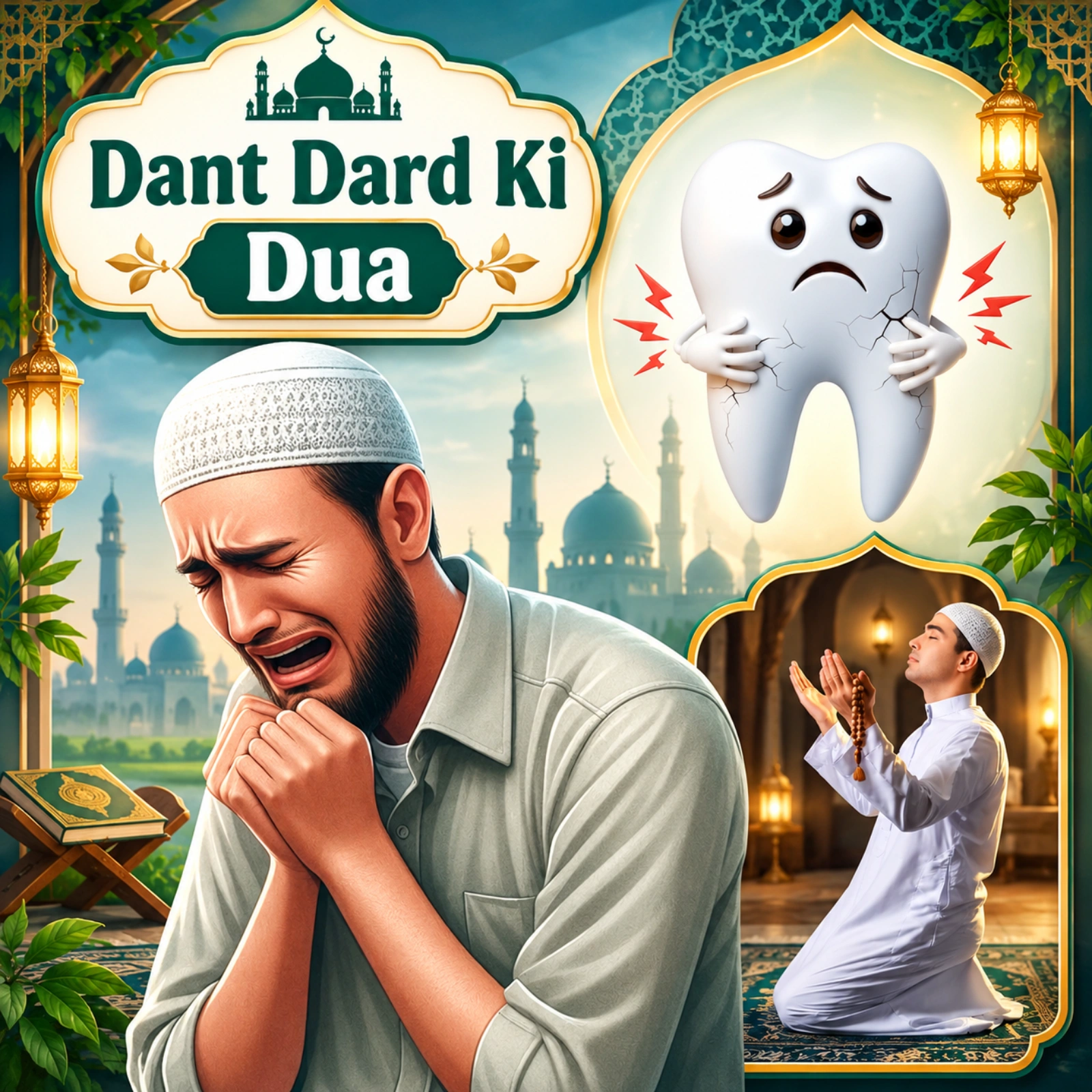
Dant Dard Ki Dua is an Islamic supplication recited to seek relief from toothache through the mercy and help of Allah. Tooth pain is one of the most intense forms of physical pain a person can experience. It can strike at any time day or night and sometimes no medicine is immediately available. In such moments, turning toward Allah (SWT) with sincere prayer is both a spiritual act and a source of genuine comfort.
Islam encourages believers to rely on Ruqyah (healing recitations from Quran and authentic Sunnah) alongside medical treatment. Seeking Allah’s help during pain is a Sunnah of our beloved Prophet Muhammad ﷺ.
A complete resource on the dua in Arabic, Urdu, Hindi, and English forms along with its Roman transliteration, meaning, Hadees references, benefits, and the correct method of recitation is presented below.
Dant Dard Ki Dua in Arabic
The most authentic dua for pain relief recorded in Islamic sources is the general pain dua taught by Prophet Muhammad ﷺ. Place your hand on the area of pain and recite this dua:
First Dua – For Any Physical Pain (Sahih Muslim)
Arabic:
بِسْمِ اللَّهِ
بِسْمِ اللَّهِ
بِسْمِ اللَّهِ
أَعُوذُ بِاللَّهِ وَقُدْرَتِهِ مِنْ شَرِّ مَا أَجِدُ وَأُحَاذِرُ
Recite Bismillah three times, then recite the above dua seven times.
Second Dua – Surah Al-Anbiya, Verse 83 (Dant Dard Ki Dua in Quran)
This is the dua of Prophet Ayyub (AS) when he was afflicted with severe illness and pain. It is found in the Noble Quran and is highly recommended for all forms of physical suffering, including toothache:
Arabic:
وَأَيُّوبَ إِذْ نَادَىٰ رَبَّهُ أَنِّي مَسَّنِيَ الضُّرُّ وَأَنتَ أَرْحَمُ الرَّاحِمِينَ
(Surah Al-Anbiya, 21:83)
Third Dua – Ruqyah for Pain (Sahih Muslim 2202)
This is specifically narrated for body pain relief through Ruqyah:
Arabic:
اللَّهُمَّ رَبَّ النَّاسِ، أَذْهِبِ الْبَأْسَ، وَاشْفِ أَنْتَ الشَّافِي، لَا شِفَاءَ إِلَّا شِفَاؤُكَ، شِفَاءً لَا يُغَادِرُ سَقَمًا
(Sahih al-Bukhari 5750, Sahih Muslim 2191 – narrated by Aisha RA)
Dant Dard Ki Dua Transliteration (Roman English)
First Dua Transliteration:
Bismillah (3 times)
A’udhu Billahi wa Qudratihi min sharri ma ajidu wa uhadhiru
(Recite 7 times)
Second Dua Transliteration (Surah Al-Anbiya 21:83):
Wa Ayyuba idh nada Rabbahu anni massaniya-d-durru wa Anta arhamur-Rahimeen
Third Dua Transliteration (Ruqyah):
Allahumma Rabban-Nasi, adhhibil ba’sa, washfi Anta-sh-Shafi, la shifa’a illa shifa’uka, shifa’an la yughadiru saqama
Dant Dard Ki Dua Meaning in English
First Dua Meaning:
“I seek refuge in Allah and in His power from the evil of what I feel (this pain) and what I am wary of.”
Second Dua Meaning – Dant Dard Ki Dua in English (Surah Al-Anbiya 21:83):
“And [mention] Ayyub, when he called to his Lord: ‘Indeed, adversity has touched me, and You are the Most Merciful of the merciful.'”
Third Dua Meaning:
“O Allah, Lord of mankind, remove the ailment, cure (me), You are the One Who cures. There is no cure except Your cure a cure that leaves no illness.”
Dant Dard Ki Dua in Urdu – اردو ترجمہ
Dant Dard Ki Dua in Urdu is provided below for easy recitation by Urdu-speaking Muslims.
پہلی دعا کا اردو ترجمہ:
بِسْمِ اللَّهِ — اللہ کے نام سے (تین بار)
اعوذ باللہ و قدرتہ من شر ما اجد و اُحاذر
ترجمہ: میں اللہ اور اس کی قدرت کی پناہ مانگتا ہوں اس تکلیف کے شر سے جو مجھے ہو رہی ہے اور جس سے میں ڈرتا ہوں۔
دوسری دعا کا اردو ترجمہ (سورہ الانبیاء 21:83):
ترجمہ: اور ایوب علیہ السلام کا ذکر کریں جب انہوں نے اپنے رب کو پکارا: “بے شک مجھے تکلیف پہنچی ہے اور تو سب سے بڑھ کر رحم کرنے والا ہے۔”
تیسری دعا کا اردو ترجمہ (رقیہ):
اے اللہ، لوگوں کے رب، تکلیف کو دور کر، شفا دے، تو ہی شفا دینے والا ہے، کوئی شفا نہیں مگر تیری شفا — ایسی شفا جو کوئی بیماری نہ چھوڑے۔
Dant Dard Ki Dua in Hindi – हिंदी अनुवाद
Dant Dard Ki Dua in Hindi is written below for Hindi-speaking readers who want to recite and absorb the meaning of the dua in their own language.
पहली दुआ का हिंदी अर्थ:
बिस्मिल्लाह — अल्लाह के नाम से (तीन बार)
A’udhu Billahi wa Qudratihi min sharri ma ajidu wa uhadhiru
अर्थ: मैं अल्लाह और उसकी शक्ति की शरण लेता हूँ, उस दर्द के बुरे असर से जो मुझे हो रहा है और जिससे मैं डरता हूँ।
दूसरी दुआ – दांत दर्द की दुआ इन हिंदी (सूरह अल-अंबिया 21:83):
अर्थ: और अय्यूब (अलैहिस्सलाम) का ज़िक्र करें जब उन्होंने अपने रब को पुकारा: “मुझे तकलीफ़ पहुँची है और तू सबसे बड़ा रहम करने वाला है।”
तीसरी दुआ का हिंदी अर्थ (रुकयह):
अर्थ: ऐ अल्लाह, लोगों के रब, इस तकलीफ़ को दूर कर, शिफा दे तू ही शिफा देने वाला है। तेरी शिफा के अलावा कोई शिफा नहीं ऐसी शिफा जो कोई बीमारी न छोड़े।
Dant Dard Ki Dua Hadees Reference
The Dant Dard Ki Dua Hadees is one of the most practical teachings of Prophet Muhammad ﷺ on seeking relief from bodily pain. The authentic Hadees for Dant Dard Ki Dua and pain relief duas are recorded in the most reliable hadith collections:
Hadees 1: Narrated by Uthman ibn Abi al-‘As (RA):
He complained to the Messenger of Allah ﷺ about a pain he felt in his body. The Prophet ﷺ said: “Place your hand on the part of the body where you feel pain and say ‘Bismillah’ three times. Then say seven times: A’udhu Billahi wa Qudratihi min sharri ma ajidu wa uhadhiru.”
(Sahih Muslim, Book 39, Hadith 5737)
This hadees is the strongest and most specific reference for using Islamic supplication to relieve physical pain, including tooth pain.
Hadees 2: Narrated by Aisha (RA):
When any person among us complained of pain, the Messenger of Allah ﷺ would pass his right hand over the affected area and say: “Allahumma Rabban-Nasi, adhhibil ba’sa, washfi Anta-sh-Shafi…”
(Sahih al-Bukhari 5750, Sahih Muslim 2191)
Disclaimer: The duas and information provided in this article are for Islamic educational and spiritual purposes only. Always consult a qualified dentist or medical professional for any tooth pain or dental issue. Dua is a means of seeking Allah’s help and should be read alongside proper medical treatment, not as a replacement for it.
Dant Dard Ki Dua Dawateislami
Dant Dard Ki Dua Dawateislami refers to the recitations recommended within the Islamic framework of Dawat-e-Islami for pain and illness. Their scholars recommend the following as part of spiritual healing (Ruqyah):
- Reciting Surah Al-Fatihah seven times over water and drinking it this is a well-known practice in Islamic healing tradition.
- Blowing over the pain area with the following words after reciting Surah Al-Falaq (113) and Surah An-Nas (114) three times each.
- Reciting Ayatul Kursi (2:255) once and blowing over the affected area.
These are all rooted in Sunnah practices and are completely authentic.
Dawat-e-Islami scholars also emphasize that seeking medical treatment is equally important and that Ruqyah supplements, not replaces, proper dental care.
Explanation – Why These Duas for Toothache?
Islam views illness as both a test from Allah and an opportunity for reward and closeness to Him. Toothache (Dant Dard) is a physical pain, and Islam has prescribed both physical treatment and spiritual healing for all forms of pain.
The Prophet Muhammad ﷺ taught his companions specific duas for body pain and also practiced Ruqyah healing through Quranic recitation and authentic prayers. The dua from Sahih Muslim (Hadith 5737) is specifically about placing one’s hand on the painful area and reciting Bismillah followed by the supplication seven times. This directly applies to tooth pain.
The dua of Prophet Ayyub (AS) in Surah Al-Anbiya is also deeply relevant. Ayyub (AS) suffered extreme illness for years, and his sincere prayer filled with complete trust in Allah was answered. Reciting this dua during Dant Dard is an acknowledgment that only Allah is the ultimate Healer.
When to Read Dant Dard Ki Dua
- Immediately when toothache begins — place your right hand on the jaw and recite the duas.
- During the night when pain is more intense and medicine may not be available.
- While waiting for medical treatment — recite the duas alongside taking appropriate medication.
- After Fajr and before sleeping — as general protection duas are recommended at these times.
- In any moment of pain — Islam does not restrict the recitation of healing duas to a specific time.
There is no specific prerequisite such as wudu to recite these duas, though being in a state of purity is preferred and more virtuous.
Benefits of Dant Dard Ki Dua
The benefits of these authentic duas are both spiritual and physical in nature:
1. Trust in Allah (Tawakkul): Reciting dua during pain is an expression of complete reliance on Allah. This itself brings peace to the heart, which reduces stress and often helps in managing pain perception.
2. Spiritual Reward: Every dua recited with sincerity earns the believer reward from Allah. Illness coupled with patience and prayer elevates one’s rank in the sight of Allah.
3. Following the Sunnah: The Prophet ﷺ practiced Ruqyah and taught specific duas for pain. Reciting Dant Dard Ki Dua is a direct act of following his Sunnah, which carries tremendous reward.
4. Actual Pain Relief Through Allah’s Mercy: Many Muslims across generations have reported experiencing genuine relief after reciting these duas with full belief and sincerity. The Quran itself is described as “a healing for what is in the hearts” (Surah Yunus, 10:57).
5. Protection from Fear: The words “min sharri ma ajidu wa uhadhiru” (from the evil of what I fear) also protect the person from anxiety and fear that often accompanies severe tooth pain.
6. Keeping Connected to Allah in Hardship: Pain can make a person forget Allah. Reciting dua during difficulty ensures the believer remains spiritually connected, fulfilling the purpose of their existence.
Correct Method of Recitation
Following the method taught by Prophet Muhammad ﷺ is important to ensure the dua is recited in the right way:
Step 1 – Make Intention (Niyyah): Before reciting, make a sincere intention that you are turning to Allah for help and healing. Your trust in Allah’s power is essential.
Step 2 – Place Your Right Hand on the Pain: Place your right hand gently on your jaw or the area where the tooth pain is felt. This is specifically mentioned in the hadees of Uthman ibn Abi al-‘As (RA) narrated in Sahih Muslim.
Step 3 – Recite Bismillah Three Times: Say “Bismillah” (بِسْمِ اللَّهِ) three times slowly and with full attention.
Step 4 – Recite the Dua Seven Times: After the three repetitions of Bismillah, recite the following seven times:
A’udhu Billahi wa Qudratihi min sharri ma ajidu wa uhadhiru
Step 5 – Recite Additional Quranic Duas: You may also recite the dua of Ayyub (AS) from Surah Al-Anbiya (21:83) and blow gently toward the painful area. Reciting Surah Al-Fatihah seven times and blowing on the area is also a recommended practice in Islamic healing tradition.
Step 6 – Seek Medical Help: After recitation, if the pain continues, visit a dentist. Islam regards seeking professional medical treatment as an obligation when the body needs it.
Important Note on Medical Treatment
Islam strongly encourages combining dua with appropriate medical treatment. The Prophet ﷺ said: “Make use of medical treatment, for Allah has not made a disease without appointing a remedy for it.” (Abu Dawood 3855)
Dant Dard Ki Dua is not a replacement for seeing a dentist. If tooth pain is persistent, caused by infection, or severe, visiting a qualified dentist is a religious obligation (fard) upon oneself, as protecting one’s body and health is a duty in Islam.
Read Also: Hamal Ki Hifazat Ki Dua
Conclusion
Toothache is a painful experience, but a believer is never alone in their pain. Dant Dard Ki Dua is rooted in the authentic Sunnah of Prophet Muhammad ﷺ and carries the healing words of the Noble Quran. Whether you recite it in Arabic, Hindi, or Urdu the sincerity of your heart and your trust in Allah is what gives the dua its power.
Recite with wudu if possible, place your right hand on the area of pain, say Bismillah three times, then recite “A’udhu Billahi wa Qudratihi min sharri ma ajidu wa uhadhiru” seven times. Alongside this, recite the dua of Ayyub (AS) from Surah Al-Anbiya and the Ruqyah dua from Sahih al-Bukhari and Sahih Muslim.
May Allah grant all those suffering from pain a swift, complete, and lasting recovery. Ameen.
FAQs – Dant Dard Ki Dua
Q1. Is there a specific Dant Dard Ki Dua in Quran?
Yes. The dua of Prophet Ayyub (AS) in Surah Al-Anbiya (21:83) is recited for all forms of pain and illness, including toothache.
Q2. How many times should Dant Dard Ki Dua be recited?
Recite Bismillah three times, then recite the pain relief dua seven times with your hand placed on the painful area.
Q3. Is Dant Dard Ki Dua Dawateislami authentic?
Yes. It is based on Sahih Hadees and Quranic ayaat. Reciting Surah Al-Fatihah, Ayatul Kursi, Surah Al-Falaq, and Surah An-Nas for Ruqyah is a well-established Sunnah practice.
Q4. Can Dant Dard Ki Dua be recited without wudu?
Yes, wudu is not required. However, being in a state of purity is more virtuous and recommended when possible.
Q5. What is Dant Dard Ki Dua in English?
Its meaning is: “I seek refuge in Allah and in His power from the evil of what I feel and what I fear.” narrated in Sahih Muslim.
 Read More Duas Every Day At Islamic Dua Hub