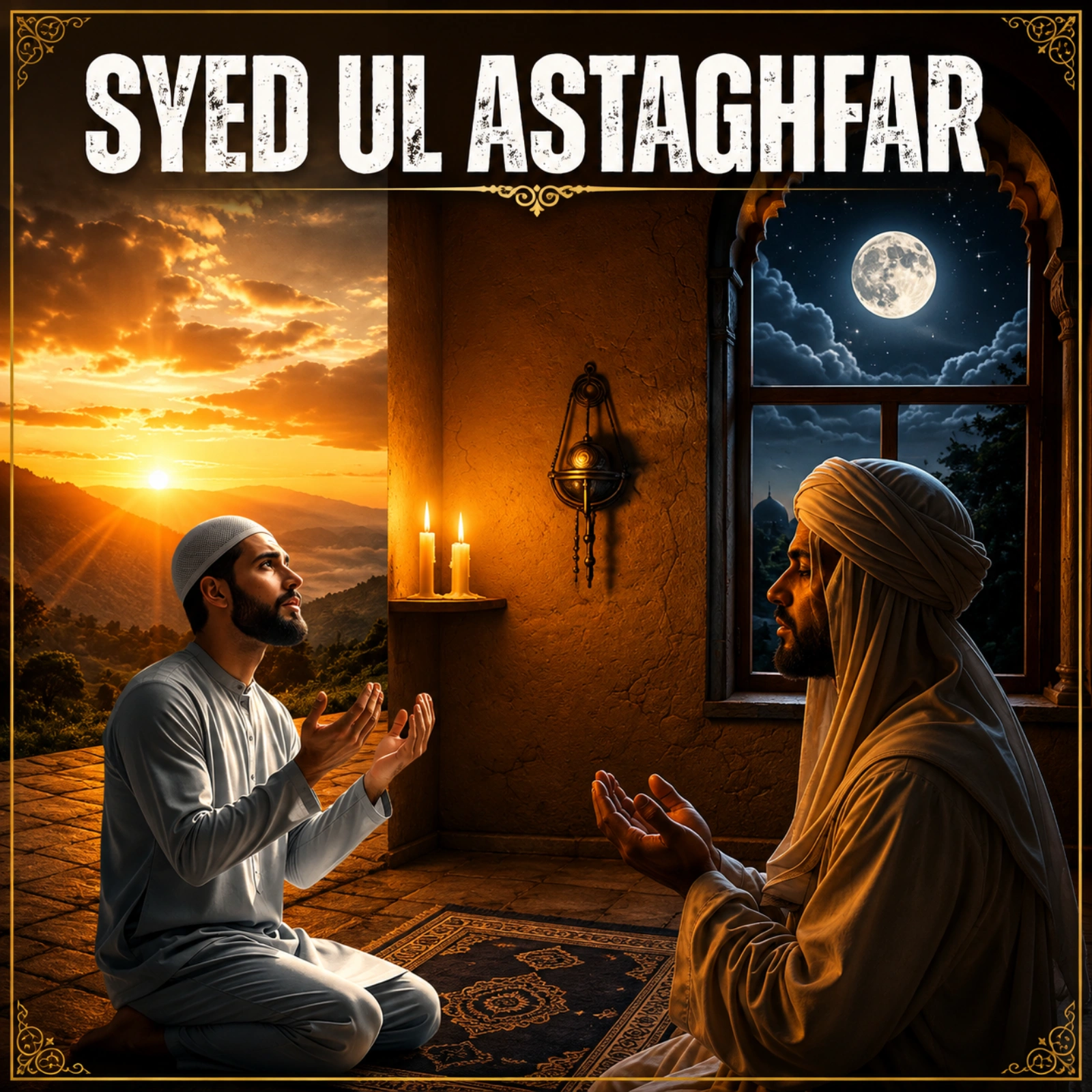
Every human being makes mistakes. Every single day, small or big errors happen in our words, our actions, and our intentions. But Allah’s mercy is always greater than any sin a person commits. The door of forgiveness is always open for those who sincerely turn back to Him.
Islam has given us many duas for seeking forgiveness, but there is one that stands above all others Syed Ul Astaghfar. The word Sayyid (سيد) in Arabic means “master” or “leader,” and Istighfar (استغفار) means “seeking forgiveness from Allah.” Together, Syed Ul Astaghfar means “The Master of All Forgiveness Supplications” the highest and most complete way of asking Allah for pardon.
The Prophet Muhammad ﷺ himself called it the most superior form of seeking forgiveness, and his exact words are preserved in Sahih al-Bukhari one of the most authentic hadith collections in all of Islam. The dua was narrated by Hazrat Shaddad ibn Aws (رضى الله عنه) and carries an extraordinary promise of Jannah for those who recite it with sincere faith.
What makes Syed Ul Astaghfar uniquely powerful is that it combines three essential acts in a single short prayer the declaration of Tawheed (oneness of Allah), an honest confession of sins, and complete hope placed in Allah’s mercy. No other istighfar dua brings all three together in one place.
Syed Ul Astaghfar in Arabic
Below is the correct and complete Arabic text of this dua with full harakaat (diacritical marks):
اللّٰهُمَّ أَنْتَ رَبِّيْ، لَا إِلٰهَ إِلَّا أَنْتَ، خَلَقْتَنِيْ وَأَنَا عَبْدُكَ، وَأَنَا عَلٰى عَهْدِكَ وَوَعْدِكَ مَا اسْتَطَعْتُ، أَعُوْذُ بِكَ مِنْ شَرِّ مَا صَنَعْتُ، أَبُوْءُ لَكَ بِنِعْمَتِكَ عَلَيَّ وَأَبُوْءُ لَكَ بِذَنْبِيْ، فَاغْفِرْ لِيْ، فَإِنَّهُ لَا يَغْفِرُ الذُّنُوْبَ إِلَّا أَنْتَ
Syed Ul Astaghfar Transliteration (Roman English)
For those who are still memorising the Arabic, here is the easy Roman transliteration. Read it slowly at first, and with daily practice the words will flow naturally:
Allahumma anta Rabbi, la ilaha illa anta, khalaqtani wa ana ‘abduka, wa ana ‘ala ‘ahdika wa wa’dika mastata’tu, a’udhu bika min sharri ma sana’tu, abu’u laka bini’matika ‘alayya, wa abu’u bidhanbi, faghfir li, fa innahu la yaghfiru adh-dhunuba illa anta.
Syed Ul Astaghfar In English – Full Meaning
Syed Ul Astaghfar In English translates as:
“O Allah, You are my Lord. There is no god worthy of worship except You. You created me and I am Your servant. I abide by Your covenant and Your promise to the best of my ability. I seek refuge with You from the evil of what I have done. I acknowledge Your favour upon me, and I acknowledge my sin. So forgive me, for surely there is no one who can forgive sins except You.”
Syed Ul Astaghfar With Urdu Translation
Syed Ul Astaghfar With Urdu Translation درج ذیل ہے:
اے اللہ! تو ہی میرا رب ہے، تیرے سوا کوئی معبود نہیں۔ تو نے مجھے پیدا کیا اور میں تیرا بندہ ہوں۔ میں تیرے عہد اور وعدے پر جتنی طاقت رکھتا ہوں قائم ہوں۔ میں ان برائیوں سے تیری پناہ مانگتا ہوں جو مجھ سے سرزد ہوئیں۔ میں تیری اس نعمت کا اقرار کرتا ہوں جو تو نے مجھ پر کی، اور اپنے گناہ کا بھی اقرار کرتا ہوں۔ پس مجھے بخش دے، کیونکہ تیرے سوا گناہ کوئی نہیں بخش سکتا۔
Syed Ul Astaghfar In Hindi – Hindi Mein Arth
Syed Ul Astaghfar In Hindi
हे अल्लाह! तू ही मेरा रब है, तेरे सिवा कोई इबादत के लायक नहीं। तूने मुझे पैदा किया और मैं तेरा बंदा हूँ। मैं तेरे अहद और वादे पर जितना हो सके, कायम हूँ। मैं अपने किए हुए बुरे कामों के नुकसान से तेरी पनाह माँगता हूँ। मैं तेरी उस नेमत का इकरार करता हूँ जो तूने मुझ पर की, और अपने गुनाह का भी इकरार करता हूँ। पस मुझे माफ फरमा दे, क्योंकि तेरे सिवा गुनाहों को कोई माफ नहीं कर सकता।
Syed Ul Astaghfar With Tarjuma – Line By Line Explanation
Understanding this dua phrase by phrase helps the reciter connect with its meaning from the heart:
① اللّٰهُمَّ أَنْتَ رَبِّيْ — “O Allah, You are my Lord” The dua begins with a direct address to Allah and a declaration that He alone is the Lord and Master. This anchors the entire supplication in pure Tawheed.
② لَا إِلٰهَ إِلَّا أَنْتَ — “There is no god except You” This is the core of the Kalimah the servant reaffirms that no one else deserves worship, obedience, or complete trust.
③ خَلَقْتَنِيْ وَأَنَا عَبْدُكَ — “You created me and I am Your servant” A humble acknowledgment of the servant’s reality. He did not create himself. He belongs entirely to Allah.
④ وَأَنَا عَلٰى عَهْدِكَ وَوَعْدِكَ مَا اسْتَطَعْتُ — “I abide by Your covenant and promise to the best of my ability” This refers to the primordial covenant (mithaq) when every soul testified to Allah’s lordship before creation. The servant admits he tries his best to honour it.
⑤ أَعُوْذُ بِكَ مِنْ شَرِّ مَا صَنَعْتُ — “I seek refuge with You from the evil of what I have done” An open admission that his own actions have caused harm, and that he needs Allah’s protection from their consequences.
⑥ أَبُوْءُ لَكَ بِنِعْمَتِكَ عَلَيَّ — “I acknowledge Your favour upon me” Gratitude and recognition Allah has given endless blessings while the servant has often been heedless.
⑦ وَأَبُوْءُ لَكَ بِذَنْبِيْ — “And I acknowledge my sin” True repentance cannot happen without honest confession. The servant does not shift blame or make excuses.
⑧ فَاغْفِرْ لِيْ — “So forgive me” A direct, sincere plea coming after acknowledging Allah’s greatness, confessing the sin, and feeling the need for mercy.
⑨ فَإِنَّهُ لَا يَغْفِرُ الذُّنُوْبَ إِلَّا أَنْتَ — “For surely no one forgives sins except You” The dua closes on the same note it opened only Allah can forgive. This is both a declaration of faith and a surrender of the heart.
Disclaimer: The information provided in this article is for general educational and religious awareness purposes only. All duas mentioned are sourced from authentic hadith collections including Sahih al-Bukhari. We have made every effort to ensure accuracy, however, for personal religious matters, kindly refer to a qualified Islamic scholar.
The Hadith Behind Syed Ul Astaghfar Dua
This supplication is proven through one of the most authentic narrations in Islamic literature.
Hazrat Shaddad ibn Aws (رضى الله عنه) reported that the Prophet Muhammad ﷺ said:
“The most superior way of asking for forgiveness from Allah is to say: [Syed Ul Astaghfar]. If somebody recites it during the day with firm faith in it and dies on the same day before the evening, he will be from the people of Paradise. And if somebody recites it at night with firm faith in it and dies before the morning, he will be from the people of Paradise.”
The key condition in this hadith is “firm faith” (muqinan biha) meaning the words must match what is truly in the heart. This is not a mechanical recitation. It is a sincere conversation between a servant and his Creator.
When To Read Syed Ul Astaghfar
The Prophet ﷺ prescribed specific times for this dua. The hadith itself mentions the morning and the evening as the primary times:
Morning — After Fajr Prayer Include Syed Ul Astaghfar in your morning adhkar (Azkar-e-Subah) after Fajr. This is the time the hadith refers to when it says “recites it during the day.”
Evening — After Asr Prayer or Before Sleep The evening adhkar (Azkar-e-Masa) after Asr is the ideal time. This is what the hadith refers to when it says “recites it at night.”
After Committing a Sin Whenever a person realises they have sinned whether in speech, action, or thought reciting it with sincere regret is one of the best forms of immediate tawbah (repentance).
During Times of Hardship When facing financial difficulty, health challenges, or anxiety, increasing istighfar especially this dua invites Allah’s mercy and relief.
In Ramadan During the blessed month of Ramadan, make special effort to recite this dua morning and evening. The opportunities for forgiveness multiply in this month.
Important Note: The hadith does not prescribe a specific number of repetitions for this dua. Once with complete sincerity and firm belief is the established sunnah practice. Quality of the heart matters far more than quantity.
Syed Ul Astaghfar Ki Fazilat – Spiritual Benefits
The following benefits of Syed Ul Astaghfar Ki Fazilat are grounded in Quran and authentic hadith:
1. The Promise of Jannah The Prophet ﷺ himself gave the extraordinary glad tiding that whoever recites this dua in the morning or evening with firm faith, and dies that same day or night, will enter Paradise. This is one of the clearest and most direct promises of Jannah tied to a single act of worship.
2. Sins Are Forgiven The very purpose of this dua is to seek forgiveness, and Allah’s promise is that He forgives all sins for those who sincerely turn to Him. As Allah says in the Quran: “Say, O My servants who have wronged themselves, do not despair of Allah’s mercy. Indeed, Allah forgives all sins.” (Surah Az-Zumar: 53)
3. The Heart Finds Peace Sin creates a heaviness and restlessness in the heart. Sincere istighfar, especially this dua, cleanses the heart and brings back the calm and light that sin takes away.
4. Barakah in Rizq The Quran connects istighfar directly to increase in provision and blessings. Allah says in Surah Nuh (10–12) that those who seek His forgiveness will receive rain, wealth, children, and gardens in abundance.
5. Closeness to Allah Every time a servant acknowledges his weakness and turns to Allah, the distance between them closes. Syed Ul Astaghfar is the most complete way of doing this which is exactly why the Prophet ﷺ called it the master of all forgiveness duas.
6. Protection from the Consequences of Sin The dua itself contains the line: “I seek refuge with You from the evil of what I have done.” Reciting this sincerely is a request for Allah’s protection from the harmful effects that sins can bring into a person’s life.
Syed Ul Astaghfar vs Short Istighfar — Key Difference
| Point | Astaghfirullah | Syed Ul Astaghfar |
|---|---|---|
| Length | Very short | Complete supplication |
| Declaration of Tawheed | Not included | Clearly included |
| Confession of sin | Not included | Explicitly stated |
| Acknowledgment of Allah’s favour | Not included | Present |
| Best time | Throughout the day | Morning and evening |
| Hadith reward mentioned | General | Promise of Jannah |
Both are important. The Prophet ﷺ used to say “Astaghfirullah” more than seventy times daily (Sahih Bukhari: 6307) as ongoing dhikr throughout the day. Syed Ul Astaghfar is the focused morning and evening supplication that serves as the complete and formal act of tawbah.
Read Also: Dushman Se Bachne Ki Dua
Conclusion
This supplication is not just a prayer it is a conversation between a servant and his Creator. Every phrase carries weight. Every word is a step closer to Allah’s mercy.
Allah says in the Quran: “And whoever does evil or wrongs himself but then seeks forgiveness from Allah Allah is indeed Forgiving and Merciful.” (Surah An-Nisa: 110)
The Prophet ﷺ left us with the greatest dua of repentance and attached to it a promise that no sincere believer should ever overlook the promise of Jannah for those who recite Syed Ul Astaghfar in the morning or evening with firm and sincere faith.
Make this dua a fixed part of your morning and evening adhkar. Teach it to your family. Share it with those around you. The reward of teaching another person this dua is also a form of sadaqah jariyah.
No sin is too great for Allah’s mercy. No heart is too broken for Him to heal. Turn to Him today with this dua and let these words carry your repentance to the Most Merciful.
? FAQs About Syed Ul Astaghfar
Q1: What is Syed Ul Astaghfar?
It is the most superior dua for seeking forgiveness in Islam. The Prophet ﷺ himself named it the “master of all istighfar.” It is recorded in Sahih al-Bukhari, Hadith No. 6306.
Q2: When should Syed Ul Astaghfar be recited?
The best times are after Fajr prayer in the morning and after Asr prayer in the evening. These two times are specifically mentioned in the hadith.
Q3: How many times should it be recited?
Once in the morning and once in the evening with sincere faith. No specific number beyond this is mentioned in the authentic hadith.
Q4: Is wudu required to recite this dua?
No. Wudu is not required for dua or dhikr. However, reciting it in a state of wudu is always better.
Q5: Can women recite it during menstruation?
Yes. This is a dua, not Quran recitation. Women can recite it freely at any time.
 Read More Duas Every Day At Islamic Dua Hub